Showing posts with label 2012. Show all posts

Wednesday, March 20, 2013

Short Cut Movie Review: The Intouchables

Short Cut Movie Review is normally less than 400 words, but in some cases may go slightly over. This is my attempt to keep writing about as many films as I see without getting bogged down with trying to find more to say. They are meant to be brief snapshots of my reaction to a movie without too much depth.


I think there is great shame in the fact that The Intouchables didn’t even make the short-list of nine films vying for the Oscar for Best Foreign Language Film. This was easily my favorite film of the year. Although it is a story so cliché-ridden it looks like it took several chapters out of the Hollywood Guide to Winning an Oscar and Scoring a Box Office Hit, it rises far above those clichés thanks to the directing team of Eric Toledano and Olivier Nakache.

Just look at this: it’s based on a true story which gives it validation with audiences; it’s about a ridiculously wealthy quadriplegic looking for a full time caregiver; the second main character is an ex-convict from the housing projects of Paris who just wants to get his unemployment checks; and it’s about the changes both men experience by spending time with one another and learning to respect things outside their comfort zones. If this had been made in Hollywood, it would be cloying, sentimental, tacky, ham-handed, and trashy. It would fall somewhere on the spectrum between Patch Adams (insufferably awful in every sense) and A Beautiful Mind (well-intentioned and well-crafted pap).

Phillippe is the wealthy man (Francoise Cluzet), tired of receiving pity from his caregivers. When Driss breezes in and stirs the pot a little, he seizes on the opportunity and appeals to Driss’s competitive nature, telling him he won’t last two weeks in his employ. Phillippe is a refined consumer of high culture: he doesn’t blink at dropping 40,000 Euros on a painting; he loves classical music, but knows nothing of pop. Driss loves Earth, Wind and Fire and Kool and the Gang, those paragons of the disco era whose music can just light up a stuffy room full of tuxedoed tightwads enjoying a string orchestra.

Toledano and Nakache never force the emotion down your throat. The musical score remains loosely in the background and I can’t recall a single moment of feeling artificially manipulated. This is also due in large part to two wonderful lead performances in Cluzet and especially Omar Sy as Driss, who went on to win the Cesar Award for Best Actor (the French equivalent of the Oscar). The movie is simply full of soul and joy. Its lessons are worth learning and they exist within the film’s story, but they’re never driven home with a sledgehammer. This is just joyous filmmaking. 

Thursday, February 28, 2013

Short Cut Movie Review: Kon-Tiki

Short Cut Movie Review is normally less than 400 words, but in some cases may go slightly over. This is my attempt to keep writing about as many films as I see without getting bogged down with trying to find more to say. They are meant to be brief snapshots of my reaction to a movie without too much depth.

This is what happens when foreign filmmakers try to replicate big Hollywood storytelling, but fall just a tad short. Yes, this is the most expensive movie in Norwegian history, but its budget still pales in comparison to the studios. Directors Joachim Rønning and Espen Sandberg try their hand at epic adventure filmmaking. The calculation worked because the Academy fell for it and nominated it for the Oscar.

The true story of a Norse adventurer who set out to drift across the Pacific on a balsa wood raft is not new to the Oscars, however. The documentary on the subject won the award more than 60 years ago. Thor Heyerdahl (Pål Sverre Valheim Hagen) wanted to prove (or demonstrate the possibility) that Polynesia was settled by travelers from South America and not, as science at the time believe, from Asia. The problem is that the Incas didn’t have ships. So Heyerdahl enlisted a crew of five, they built a raft using only materials available to the ancient Incans and they set out.

This is a typical story of a man with singleness of purpose, so driven that he loses his family in the process. You might be fooled by the Norwegian dialogue into thinking you’re watching a great movie. It looks good and all, but it’s really mediocre. I was put off by some early scenes of stilted pretension and poor writing. If this movie were in English hardly anyone would give it a second thought.

Wednesday, February 27, 2013

Short Cut Movie Review - Ai Weiwei: Never Sorry

Short Cut Movie Review is normally less than 400 words, but in some cases may go slightly over. This is my attempt to keep writing about as many films as I see without getting bogged down with trying to find more to say. They are meant to be brief snapshots of my reaction to a movie without too much depth.

You might have heard a couple of years ago about a Chinese artist and dissident who disappeared after several years of criticism, through his blog and various art projects, toward the Chinese government, specifically the state of government school buildings that collapsed in the 2008 Sichuan earthquake killing as many as 5,000 children. This documentary by Alison Klayman presents Ai Weiwei as he is, faults and all: artist; activist; protester; dissident; husband; father; philanderer. He is a big teddy bear of a man with a portly figure and a long scraggly beard. He’s taciturn in most of his interactions, but you can see his mind aflutter when he’s working. Most of his art is produced by technicians who realize his visions.

The subtitle of the film refers to Weiwei’s refusal to make apologies for any of his criticisms, a stoic and immovable disposition that even carries over into his personal life in the form of an extra-marital affair that resulted in a child. Throughout the film, he is continually revealed as a man who believes wholeheartedly that incremental changes can be made by a single man standing up to injustice. He is relentless in his pursuit of reform, refusing to back down even when a police beating leaves him with a severe brain injury requiring surgery, even when his official complaints are predictably met with curt dismissals, even after months of imprisonment and isolation designed to break his spirit. The more people are called to action by Weiwei’s story, the sooner the Chinese government might see some more significant changes.

Short Cut Movie Review: The Imposter

Short Cut Movie Review is normally less than 400 words, but in some cases may go slightly over. This is my attempt to keep writing about as many films as I see without getting bogged down with trying to find more to say. They are meant to be brief snapshots of my reaction to a movie without too much depth.

Frederic Bourdin lives the American high school dream.
This documentary was short-listed as a finalist for the Oscar this year, but lacks the weight or the populism necessary to make the final five. This is the incredible story of a 23-year old French man who successfully passed himself off (for a short time) as a 16-year old boy from Texas who had gone missing 3 ½ years earlier. What’s more, he fooled the boy’s actual family, who believed they had gotten their lost son/brother back after years of alleged torture and sexual abuse. You won’t believe the strange turns this story takes.

Director Bart Layton uses dramatic recreations and in depth interviews with everyone involved including the missing boy’s mother, sister, and other family members, the private investigator who figured out the truth in the unlikeliest of places (this guy could be the main character in a story of his own, he’s so fascinating). Then there’s the too bizarre to believe you’re actually hearing it interview with Frederic Bourdin, the amoral and remorseless man who has impersonated countless people like a modern day Zelig. Layton wisely avoids allowing judgment to creep into the story. He gives all participants the space to tell their stories in their own words, something none of the news programs ever afforded the grieving family.

Short Cut Movie Review: The Gatekeepers

Short Cut Movie Review is normally less than 400 words, but in some cases may go slightly over. This is my attempt to keep writing about as many films as I see without getting bogged down with trying to find more to say. They are meant to be brief snapshots of my reaction to a movie without too much depth.

As not just a documentary filmmaker, but as a journalist, Dror Moreh pulled off a major coup in getting six former heads of the Israeli security agency Shin Bet to go on camera to talk about sensitive events in Israel’s history. Apparently Ami Ayalon was the first to agree to appear and he was instrumental in contacting the others and convincing them to participate. This is hardly surprising to learn considering his obvious objections to some of Israel’s policies regarding West Bank settlements and the morality of targeting terrorists for assassination.

The inspiration Moreh took from Errol Morris’s The Fog of War is evident in the manner of his interviews which are the result of probing questions, the carefully reflective and highly introspective answers given by his subjects, and the intercutting of news footage, photographs, and eerie aerial shots similar to those seen in spy movies where an agency is targeting a terrorist. His six interviewees are not exactly apologetic with respect to the orders gave and carried out, but they have clearly given their actions a lot of thought in the intervening years. Some are less apologetic than others, but all reveal the minds of philosophical men who see the need for greater understanding if peace is to be achieved.

Wednesday, February 20, 2013

The Turin Horse Movie Review

In Bela Tarr’s latest, and reportedly final, film so much happens while seemingly nothing happens. It takes a lot of motivation to begin a black-and-white Hungarian art film with a 2 ½ hour running time, but surprisingly, once I started I could barely take my eyes away. The Turin Horse is an exquisitely beautiful and fascinating study of an old farmer’s and his daughter’s trudgingly repetitive and lugubrious existence in rural Italy in the late 19th century.

Thursday, February 14, 2013

Oscar-nominated Documentary Short Films Review

The five nominated short documentaries are divided into two programs in most places because of the length of the films. Maybe they’ve also been split up because there’s hardly a soul who can handle in one sitting stories of women with cancer, Rwandan children with heart disease, homeless New Yorkers collecting cans and bottles for income, and a homeless teenager. There is certainly no shortage of tears in the audience during any screening of these films, all of which are deeply moving experiences and, in most cases, excellent examples of documentary filmmaking. Here are my brief reactions in rough order of preference.

The most inspiring, my favorite, and also my pick to win the award is Inocente, which follows a 15-year old artist in San Diego whose family has spent years being homeless and drifting from shelter to shelter after escaping an abusive father. Her paintings not only provide a much needed outlet of expression, but also an opportunity to make something of her life when a local program gives her the chance to put on an art show. I’m very suspicious that this girl happened to be chosen as one of two young artists out of 5000 to do a show. I have a feeling there was some manipulation or collusion between the documentarians and the charity because it feels too perfect. I’m not really concerned with that, however, because if it means this girl gets better future opportunities as a result, and also that the charity gets more exposure and thus more funding, it means it can help more people. There’s a whole lot of material crammed into this 40 minutes. The only regret is that we would love to know what happens to her ten years from now, but we may never find out.

Tuesday, February 12, 2013

Oscar-nominated Live Action Short Films

Following are my brief reactions to the five films nominated this year for the Oscar for Best Live Action Short Film. The wonderful thing about a short film is how it reminds you that not all stories need to be told in two hours. To see a story presented in 20 or 30 minutes is just a wonderful relief. You really get to see how much fat gets added into feature films to pad their length. Any one of these five films could easily be developed further, but what’s the point? They are all nearly perfect as they are. However, I didn’t think this year’s lot were as strong as last year’s and there’s nothing I feel very strongly about. They are in my rough order of preference.


Asad is the one of the five that best expresses zest for life and hope for the future. In war-torn Somalia, where bands of rebels come passing through villages taking what they want and killing when they please, a boy is stuck between the old world of fishing the open seas, where all the villagers know he’s had no recent luck, and the new world order of piracy. Asad longs to join his older friends on a pirate raid, but luckily for him they don’t allow it. On his first solo fishing trip he later makes a surprising discovery – one that sort of sums up the oddities of life.

Sunday, February 10, 2013

The Impossible Movie Review

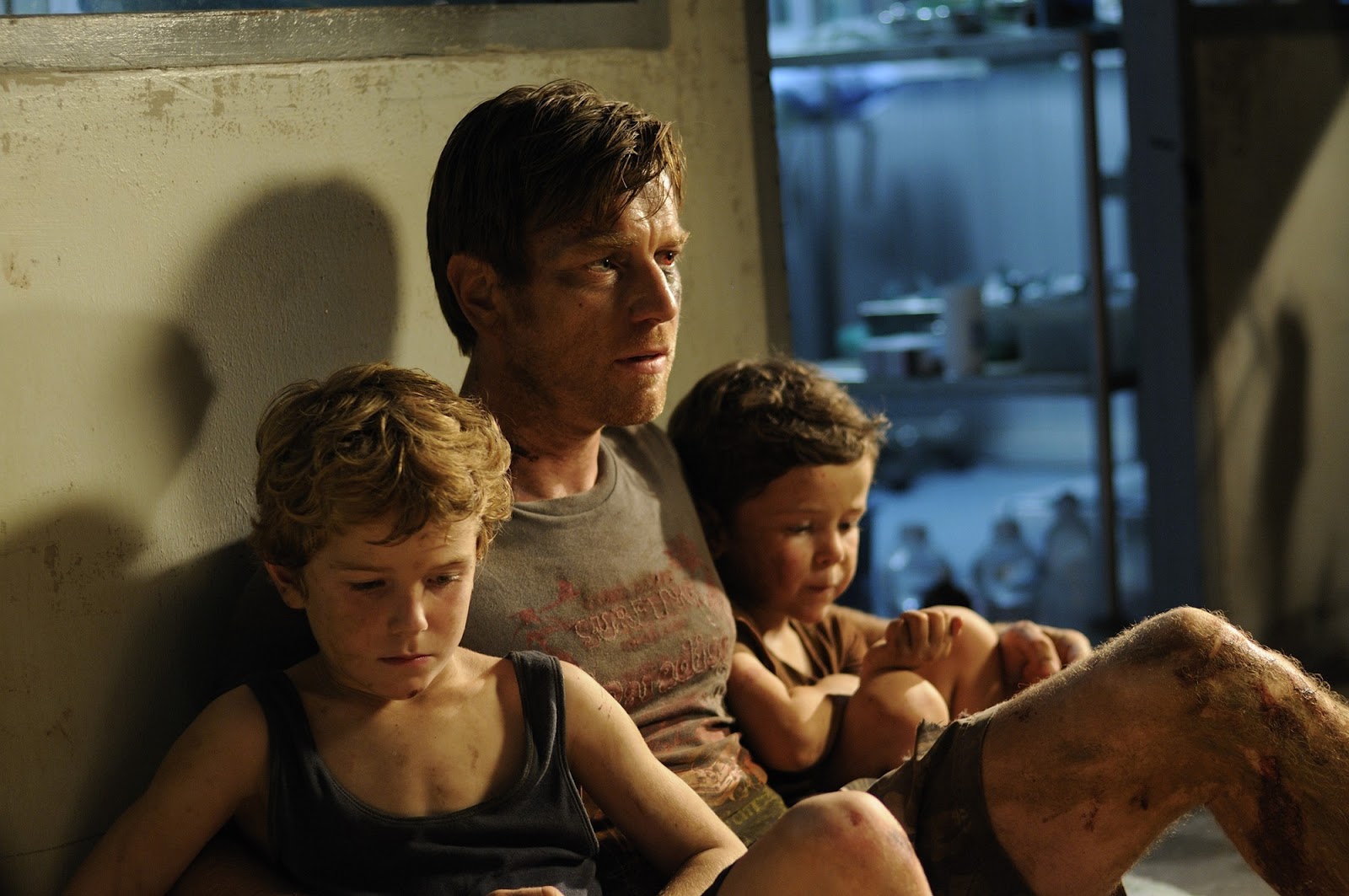
Sometimes you have to attempt to erase your preconceived notions of a movie before you go in to see it. With The Impossible, Spanish director J.A. Bayona’s retelling of the true story of a family of five that survived the devastating 2004 tsunami in Thailand, I had plenty. The trailer did the film no favors as far as I was concerned. I made two predictions when I saw the trailer: 1) the film would be an appalling depiction of that terrible tragedy for its focus on a rich white family that made it through while hundreds of thousands of poor dark-skinned people died around them; 2) the film would be a cloying and phony emotional tug at the heartstrings, cynically designed to extract false tears from the audience. I was wrong on the second, but absolutely dead-on accurate on the first.

Wednesday, February 6, 2013

Seven Psychopaths Movie Review

What is it with filmmakers who start out with some quirky little movie that gets a lot of recognition for its panache, or great writing, or great storytelling and then they’re given a big budget and bunch of movie stars and things just seem to run away from them? Martin McDonagh started out with In Bruges, which signaled the start of a promising career in the gangster/hitman genre, the kind of talky pictures about wretched individuals who nevertheless epitomize cool made famous by Quentin Tarantino. Seven Psychopaths is his second feature film, an absurd farce of a story about an Irish screenwriter named Marty (autobiographical much?) trying to write a movie called Seven Psychopaths (self-referential much?).

Monday, February 4, 2013

How to Survive a Plague Movie Review

Documentary films are first and foremost supposed to do just that – document a story, an event, a person, etc. It tends to be the case that most documentaries are contemporary and many are a call to action for some pressing issue that the filmmakers feel strongly about. The recent Oscar winners An Inconvenient Truth, which deals with global warming, and The Cove, about dolphin fishing in Japan, are two examples. Sometimes they tell a story of events long ago, perhaps bringing to the public’s attention events they otherwise would have known little to nothing about. Those we might refer to as historically educational documentaries. These include just about every Holocaust documentary in existence. Some are just plain good stories and would make for an emotionally moving experience if adapted into a narrative film. Last year’s Oscar winner Undefeated as well as Man on Wire from several years ago come to mind. But while I sat through How to Survive a Plague, one of this year’s Documentary Feature nominees, I kept thinking it felt so strangely anachronistic.

Friday, February 1, 2013

5 Broken Cameras Movie Review

It used to be that in your Academy Awards pool you could place good money on any Holocaust-themed or Israel-as-terror target movie to win the Documentary Feature award. It is perhaps a little too revealing of general sentiment toward Bibi Netanyahu’s administration and its policies toward Palestinians, the peace process, and settlements in the West Bank that not one, but two documentaries that are critical of Israel have been nominated for the award. The first is an Israeli and Palestinian co-production called 5 Broken Cameras. It is pure documentary in its most simplistic format, featuring personal footage shot by Emad Burnat, a resident of Bal’in, a Palestinian village in the West Bank. His cameras document weekly protests of the settlements that continue to encroach upon their land and the separation barrier that cuts them off from their livelihood. The film is divided into segments each one marked by the destruction of one of his cameras. In the end he displays them all on a table, some broken by the Israeli Army, one shot, one destroyed in a car accident. All filmed with a sixth camera that we’re told is still filming today. Burnat’s co-director is Guy Davidi, who stepped in to help with the editing, the translation of the Hebrew spoken by Israeli citizens and soldiers, and the voiceover narration that steadily defines the narrative.

Wednesday, January 30, 2013

The Invisible War Movie Review

When I was growing up there were these laughably ineffective TV messages aimed at kids to ward them away from drugs. They usually featured some variation on a good clean looking kid being approached out of the shadows by some shady older kid offering drugs and calling him a chicken for refusing. We always laughed at the absurdity of these ads because they looked nothing like anything we ever experienced. Every teenager knows that this is simply not how kids encounter drugs for the first time, or any time for that matter. The target message – “Just Say No” to drugs – was effectively lost for a complete failure to understand the issue.

Monday, January 28, 2013

Zero Dark Thirty Movie Review

I’m coming at my review of Zero Dark Thirty after it has become a lightning rod for criticism and charges that it depicts torture as having elicited a positive outcome in the hunt for Osama bin Laden, overplaying the role of “Enhanced Interrogation Techniques” in tracking down the world’s most wanted terrorist. Director Kathryn Bigelow’s defense is as reasonable and accurate as you can get: depiction is not the same as support. But the specific charge is that the story, as laid out in Mark Boal’s screenplay, has the chain of information leading to bin Laden coming from facts gleaned through torture. I recognize this is problematic, made more complicated by the fact that Boal and Bigelow have touted the journalistic nature of the film.

Friday, January 25, 2013

The Hobbit: An Unexpected Journey Movie Review

Peter Jackson’s expansion of his mega-profitable behemoth of a franchise has gone from being a labor of love and an astounding cinematic adaptation of a beloved trilogy of books to a cynically calculated cash grab. The Hobbit: An Unexpected Journey is just the first in a three part film adaptation of Tolkien’s single book prequel to The Lord of the Rings. Clocking in at just under three hours, it is already nearly twice the length of the 1977 animated version that was already a decent adaptation.

Wednesday, January 23, 2013

Premium Rush Movie Review


Premium Rush starts with a bang-whoosh, revs up the adrenaline with a dynamic camera following a bike messenger through the streets of New York City, and kicks up the rock soundtrack. Then it doesn’t let up for the next 90 minutes. Just when you think you’ve settled into a groove along with the story, it throws you for a loop by doubling back on itself to fill in some crucial piece of story information. A digital clock appears on the screen to let you know what time it is or was. Then just as suddenly it whizzes you back into the present.

Django Unchained Movie Review

Quentin Tarantino likes to make movies that he would like to watch. Well, shouldn’t every filmmaker do the same? It’s widely known that Tarantino came up on movies by working in a video store and devouring all the trashy B-movies he could get his eyes on. All of his movies are basically slicked up versions of those same midnight and drive-in classics that were his film education. Spaghetti westerns have served as one of the largest influences on his movies, particularly the Mexican standoffs that tend to occur in the climaxes of films like Reservoir Dogs and Pulp Fiction. In the last decade he has specialized in revenge pictures, with Django Unchained being the latest, this time an American slave revenge fantasy in the style of a cheap spaghetti western.

Frankenweenie Movie Review

Tim Burton has spent his entire filmmaking career searching for the magic of those old science fiction and horror films of the 1950s and 1960s. That’s the stuff he grew up on and it obviously touched him on a personal level because almost everything he does pays homage in some way to them. Ed Wood is both biography and homage to the director of the cheapest “so bad it’s good” B-movies. His latest film, and first stop-motion animation as director, is Frankenweenie, which happens also to be a remake of an early short film he made in 1984, before he ever stepped behind the camera for a full-length feature. The original short film runs 25 minutes and stars Daniel Stern and Shelley Duvall as the parents of a boy who loves his dog, Sparky, and directing cheap 8mm films in the back yard (like Burton did as a boy). After the dog dies in an accident, the boy uses science to reignite life in his dead beloved, much to the dismay of the townspeople, who, in the spirit of Frankenstein, burn down an old windmill in an attempt to destroy the grotesquery of resurrected death.

Sunday, January 20, 2013

ParaNorman Movie Review

Laika Entertainment is filling the niche of animated features intended for children who are a little more grown up. Their first two films, Corpse Bride and Coraline, are darker and more macabre than the fare churned out by the other big animation studios (although Dreamworks, Disney, and Pixar produce some fantastic animated films). Laika’s third feature, released earlier this year and just recently nominated for the Academy Award for Best Animated Feature, is ParaNorman, an equally light macabre story that is great family fun if you leave it the youngest and most impressionable members of your clan unless they can handle ghost, zombies and scary witches.

Saturday, January 19, 2013

Killer Joe Movie Review

I can’t remember seeing a film so depraved, immoral, and pointless as William Friedkin’s Killer Joe, based on the play by Tracy Letts. Of course, I’ve never seen The Human Centipede, so there may be hope yet. I’ve seen it described as a dark comedy and yet I found no humor in it. It is full of characters so stupid, who make such bad decisions – life-changing decisions – without much thought, that it’s almost impossible to side with anyone. There is perhaps one exception in the form of a pure innocent young woman, but she is such an odd portrait of a human being that her entire character has no credibility.

Everything I Saw in the 2nd Half of 2025

30 Dec. Hamnet (2025) [cinema]* 28 Dec. #4133 Song Sung Blue (2025) [cinema] 25 Dec. #4132 Marty Supreme (2025) [cinema] 16 Dec. #4131...